What Apple’s Latest Launch Can Teach CPG Brands About Creating Hype
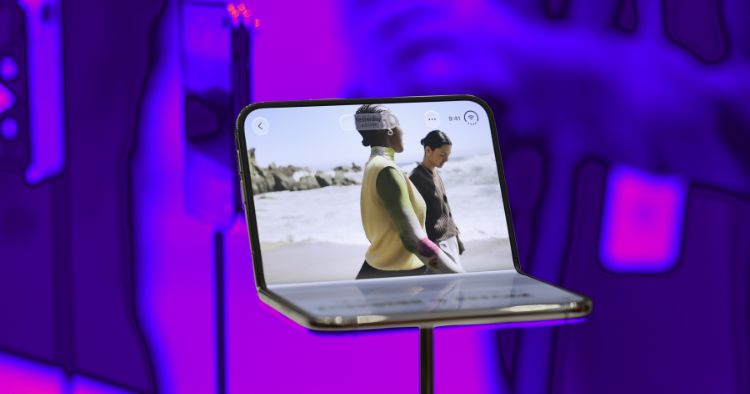
Apple's latest iPhone launch last September had a lot riding on it.
For the first time in years, the company was introducing a major new iPhone form factor: the iPhone Duo, its first foldable phone. It also came just days after John Ternus officially became Apple's CEO, making the September event his first major iPhone launch in the role.
And then there’s the category itself.
Foldable phones aren't new. Samsung and other smartphone makers have been selling them for years. The basic idea of opening your phone to get a larger, tablet-like screen has already been established.
So Apple wasn't introducing consumers to the concept of a foldable phone.
It had to give them a reason to care about Apple's version of one.
That's what makes the launch interesting from a marketing perspective.
The lesson for CPG brands isn't to copy Apple's budget or brand recognition. It's to look at how Apple made something familiar feel worth paying attention to again.
Quick Glance
- A new face can create a new chapter John Ternus' first major iPhone launch gave the event an additional layer of attention.
- Familiar categories still need a fresh story Foldable phones already existed. Apple had to explain why its version was different.
- Don't sell the feature. Sell what it changes The Duo isn't just about having two displays. Apple focused on what that larger, foldable screen enables.
- Make the reveal feel like an event A launch becomes more memorable when there's something worth anticipating, discussing, and reacting to.
Hype Starts Before the Product Does
Apple has spent years making its product launches something people anticipate.
By the time the company gets onstage, the audience already knows an event is coming. The speculation, rumors, announcements, and conversations leading up to the event have already started building interest.
That matters because a launch doesn't have to begin when the product becomes available.
For CPG brands, the same principle can apply to a new flavor, collaboration, limited-edition product, packaging refresh, or entirely new product line.
Instead of going straight from: “New product. Available now.”
you can create a progression: “Something new is coming.”
And finally: “It’s here.”
That gives your audience a reason to follow the story instead of encountering the product for the first time on launch day.
The product might be the payoff, but the anticipation is part of the marketing.
You Don't Have to Be First to Make People Care
This is probably the most interesting part of the iPhone Duo launch.
Apple did not invent the foldable phone.
The category already existed. Competitors had already spent years showing consumers what foldable devices could look like and how they could work.
Apple entered an established category and still positioned the iPhone Duo as a significant new chapter for the iPhone.
The takeaway for CPG brands is simple:
You don't always need to be first.
Maybe there are already ten protein bars targeting the same consumer.
Maybe every beauty brand already has a vitamin C serum.
Maybe your category has seen a dozen versions of the same functional beverage.
That doesn't mean there's nothing left to say.
Your opportunity might be in the positioning, the consumer experience, the brand story, the collaboration, the packaging, or the cultural moment around the product.
A New Chapter Gives People Another Reason to Pay Attention
The product wasn't the only new thing on Apple's stage.
John Ternus became CEO on September 1, following Apple's planned leadership transition from Tim Cook. Apple had announced the change months earlier, so the September event was already going to be an important moment for the company.
Then Ternus took the stage for one of the company's biggest annual product moments.
That doesn't mean the leadership transition was the entire marketing strategy. It wasn't.
But it gave the launch another layer of context.
People weren't just watching a new iPhone announcement. They were also watching a new chapter for one of the world's most recognizable brands.
CPG brands can have similar moments.
A new founder stepping into the spotlight. A new creative director. A major rebrand. A new retail partnership. A significant collaboration. A new chapter in the company's story.
These moments don't have to become the headline of a campaign.
But when something genuinely changes around your brand, there may already be a story worth telling.
Don't Just Sell the Feature. Sell What It Changes.
One reason product launches can fall flat is that brands spend too much time explaining what the product has and not enough time explaining why anyone should care.
“20 grams of protein.”
“New packaging.”
“Three new flavors.”
“Now with more vitamin C.”
Those details might matter. But they're not necessarily the story.
Apple's foldable phone is a useful example.
“It's foldable” is the feature.
What Apple focuses on is what that design enables: a larger display in a pocketable form, more room for multitasking, gaming and content, and new ways to use the camera.
The difference is subtle but important.
Features explain what a product is. Benefits help people picture what the product could do for them.
Give People Something to Talk About
A good launch doesn't just generate impressions. It gives people something to discuss.
Think about the conversations that happen around a major product launch:
- “Did you see the new one?”
- “Wait, it actually folds like that?”
- “Would you buy this?”
- “I need this.”
- “Is this actually worth it?”
That conversation is part of the hype.
For CPG brands, you can create similar moments through a surprising product reveal, an unexpected collaboration, a creator-led launch, a limited drop, a strong visual concept, or a campaign that gives people an opinion to have.
The goal isn't to manufacture controversy for the sake of attention.
It's to create something with enough personality or relevance that people have a reason to bring someone else into the conversation.
Make the Launch Feel Like a Moment
Not every CPG launch needs a keynote, giant production, or celebrity-filled event.
But it does need a reason to feel distinct from everything else your audience sees that day.
Apple has the advantage of a highly recognizable launch format. People know the event is coming, know where to watch, and know that something is going to be revealed.
CPG brands have to find their own version of that moment.
It could be:
- A creator-led reveal
- A limited-edition drop
- A collaboration
- A pop-up or experiential activation
- An unexpected social campaign
- An exclusive first look
- A community-first launch
- A product reveal built around a cultural moment
The format can change.
The principle doesn't:
Give people something to experience, not just something to buy.
The Launch Is the Beginning, Not the Finish Line
Another lesson from a major launch is that the conversation doesn't have to end when the product is revealed.
That's when the next phase begins.
- What are customers saying?
- What are creators doing with the product?
- What questions keep coming up?
- What unexpected reactions are people having?
- What content are customers making?
- What parts of the launch are people sharing?
Those reactions can become the next round of content.
For CPG brands, this can mean turning launch-day momentum into creator content, customer stories, social proof, FAQs, reviews, community conversations, and new creative angles.
The launch creates the initial spark.
What you do with the attention afterward determines whether that spark keeps going.
The Product Isn't Always the Hype. The Story Around It Is.
Apple didn't invent the foldable phone.
It entered a category that already existed, with competitors that had been there for years. But it gave consumers a new reason to look at that category, introduced the product during a significant new chapter for the company, and built the launch around what the product could actually enable.
That's the part CPG marketers can take away.
Your product doesn't have to be completely unprecedented to create excitement. It needs a reason to matter now.
Maybe it's a new product. Maybe it's a new use case. Maybe it's a collaboration. Maybe it's a new chapter for the brand.
Because when people aren't just seeing your launch but actually talking about it, that's when a product release can become something bigger.
Want More CPG Marketing Conversations Like This?
That's exactly what Clout Collective is built for.
Clout Collective brings together CPG founders, marketers, creators, and operators to share ideas, talk through what's working, and learn from people navigating the same industry.
Because sometimes the best marketing idea isn't sitting in a report. It's in the conversation happening between people in the industry.